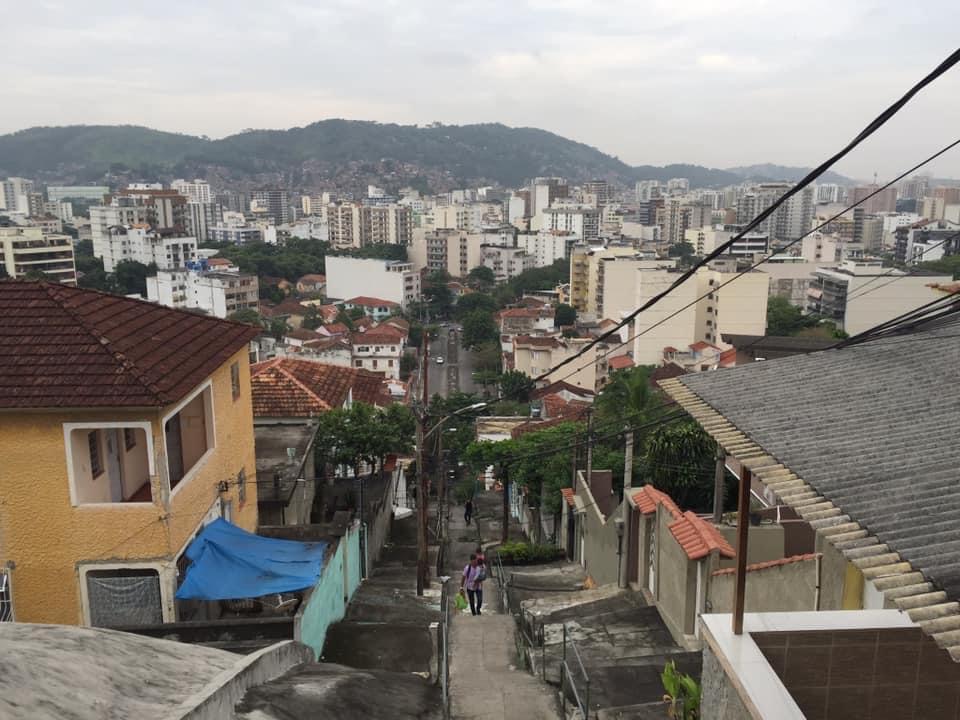
F is for Favelas

Standard

One of my principles when travelling internationally – not official Salvation Army policy, though it has always been supported – is always to look for multiple possibilities for potential storytelling.

And so it came to pass that, en route to a conference elsewhere in Brazil, a 24-hour stopover in Rio could be factored in at pretty much nil extra cost. The benefit of this was that Rio would shortly be hosting the Olympics, and The Salvation Army was planning a significant range of activities in support.

But telling the story with less than a day available to gather the information was quite a task. Fortunately, I was helped massively by the leader of The Salvation Army in Greater Rio, Major Dan Ford. He and I had immediately clicked during our pre-visit phone calls and email exchanges, and he had a good understanding of what we wanted to achieve. He was also in a position to gain access to the various facilities and individuals that we felt would help tell the story, and very helpfully went above and beyond by acting as my guide and chauffeur for the day.

The favelas in Rio are numerous and notorious for their high levels of often violent crime. And, as is typical, The Salvation Army faces this head on. It operates three major full-time projects right in the heart of these communities (and several smaller scale ones), offering a range of support and particularly providing children a safe place to go before/after school. There is an extremely high likelihood that children will be drawn in to drugs cartels or gun/knife crime if not offered more meaningful activities. In The Salvation Army’s centres, the response to this was sport, dance, music, art, craft, help with homework, counselling, an almost unending list…

Even on my whistlestop visit (barely five minutes on Copacabana beach!), I did see some fearsome weapons on display. Major Dan on occasion suggested I should lower my camera to make it clear I wasn’t filming. Tensions were sometimes high. But I also met some of the most wonderful kids, with realistic hopes for their future and such gratitude for the relationships being nurtured with them. Not just ‘after-school club’, but a treasured investment in their lives.

You can read my piece for All the World magazine here: https://issuu.com/salvationarmyihq/docs/atw-january-march_2016-web/16
E is for England

Standard

As I head towards The Salvation Army’s City of London-based International Headquarters one last time (for now, at least), it’s appropriate to reflect that a lot of my work has taken place in England. And while the nature of the job has meant that travel to Denmark has been more likely than to Dudley, the diversity and variety of the things I’ve been involved with ‘at home’ has been no less notable.

International Headquarters itself has played host to a vast array of different endeavours that I have then played a part in communicating to a wider world. We’ve had art exhibitions, book launches, a community choir, discovering Christianity courses, ecumenical events, a fashion show… and this is rapidly becoming an inadvertent A-Z within an A-Z! A strength of IHQ is that it is not just a lofty ‘ivory tower’ but intended to be a place where the community can come and experience the breadth of the ministry undertaken around the world.

And elsewhere in England, we have supported the 2012 Olympics (the torch relay came past the office in the capable hands of Steve Chalke), elected numerous Generals, and held large-scale rallies and celebrations.

Highlights are, once again, difficult to choose. But professionally, leading the Boundless digital media team on the occasion of the 150th anniversary of The Salvation Army is hard to beat. This remains the largest event ever held at The O2, and involved a week of live blogging and social media curation from each of the venues as well as Heathrow Airport (airside passes are a wonderful thing!), Buckingham Palace (twice, but thankfully not the Tower), the birthplace of The Salvation Army in east London and, most memorably, preceding a mass March down The Mall with a live camera feed to convey the mounting atmosphere to the thousands watching online. I felt like a rock star for twenty minutes as the crowd lining the route roared!

Other memorable events (for varying reasons!) include an awareness-raising event that took Sea of Colour (an enormous textile artwork made up of discarded refugee clothing) over the Thames as a symbol of the treacherous boat journeys migrants were (and still are) having to risk their lives on.

Then there was a series of six live and interactive panel debates, hosted in conjunction with The Salvation Army International Social Justice Commission in New York, where we we were fortunate enough to have the BBC’s Nick Bryant presenting. In London, viewers had to make do with Kevin Sims, who I owe a debt of gratitude for seemingly constantly barking in his ear but having never (yet!) riled.

And the occasion at a major congress in Harrogate where a multi-camera broadcast turned into a single fallback camera feed due to what might generously be described as a ‘power cut’.

Actually, this seems like the right moment to declare a public apology to all those that I’ve subjected to monstrously bizarre expectations. Gaz Rose and Brent Forrest on a cycle rickshaw, for example, endeavouring to keep a Live-U link from Oxford Street on the air. Tim Siney for never flinching (well, not too much) when presenting with increasingly complex technical demands. Dave Haas for ‘while you are here…’ ephemera. Sylvester Osaji for urgent despatches to McDonald’s. Joseph Halliday for pretty much everything I’ve ever uttered, but certainly for the fabled time I proposed a Salvation Army version of the Periodic Table. I should probably seek forgiveness from Mendeleev too…

D is for Darjeeling, Dhariwal and Delhi

Standard

Three for the price of one today.

One element of The Salvation Army’s 150th anniversary celebrations was a film festival intended to showcase some of the movement’s diverse ministry. Then-boss John Murray felt that it would be prudent for us to submit our own entry. And so it was that I travelled with him to India in May 2015, ably accompanied by Gaz Rose and boom pole holder extraordinaire Howard Dalziel. Our task: to tell the story of how The Salvation Army began in India – it’s first international foray – and how the work had developed today.

It’s fair to say I didn’t know much about India. And after two weeks of full-on travel, interviewing, capturing b-roll and context footage, sound and stills, I’ve still only scratched the surface. But what an amazing surface it is. So many languages, cultures, landscapes, histories, tastes, sounds and (especially) smells!

India is BIG. This seems obvious, but I really felt it after a fortnight of constant movement from one location to the next. The admiration we had for the early Salvation Army pioneers, led by Frederick Booth-Tucker, only increased as we appreciated the scale of their task without the modern transport and facilities we were able to utilise.

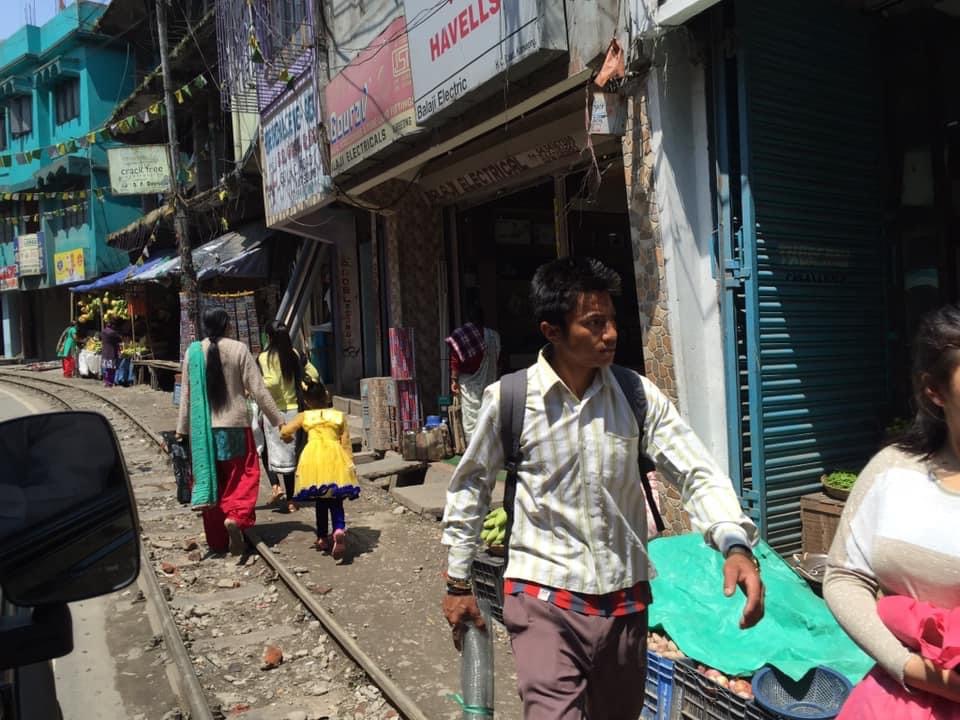
And fortunately (for it would have been a rubbish film otherwise), God is also big in India. We visited Salvation Army-run hospitals and clinics, such as the one in Dhariwal offering health services to very rural and remote communities for whom healthcare would otherwise be unaffordable. We visited schools, including two in the Darjeeling area dedicated to young people with special needs – blind and deaf students respectively. We visited an inner-city project in Delhi offering hope and practical support to Burmese migrants who effectively didn’t even exist in the government’s eyes, and could therefore neither legally work nor draw statutory benefits.

It’s impossible to select a specific highlight. Worshipping in a ramshackle tin hut on a tea plantation in the Himalayan foothills? Playing football with a bunch of young lads who attend a Salvation Army project in the red light district of Mumbai because their mothers are touting for ‘trade’ nearby? Listening to the aspirations of the ‘railway children’ who eke out a precarious life alongside the tracks in Kolkata? Walking barefoot on the cool marble of the Golden Temple in Amritsar, reflecting on the mélange of faiths and traditions and yet the acceptance of The Salvation Army and its message in many, many communities? The genuinely warm welcomes and inevitable garlanding everywhere we went? Surviving the terrifying road traffic and rather dodgy planes?!

So much to be thankful for.

The film, should anyone be interested: https://www.youtube.com/watch?v=MMTWYnJvEVY

C is for Czech Republic

Standard

Continuing my ‘The Salvation Army and Me’ ramble…

I think beautiful Prague may be vying with Copenhagen for the city I have visited most often on business, and for a variety of reasons. However, my first visit was at the request of the chair of The Salvation Army’s European Communications Network, who asked if I would present a session on digital communications to a distinguished group made up of communications practitioners from around Europe.

This was pretty early on in my time at International Headquarters and I must have bluffed my way through reasonably competently, as I was subsequently invited to take part – in a different European city each time – every year since.

The ECN has been the most consistently supportive and influential group I’ve been a member of, and I have formed many deep friendships. A true band of brothers (and sisters). It’s risky to name names, but particular kudos must go to Lars and Pavla Lydholm, Menno de Boer, Nathan Sudmeier, David Germain, Mats Wiberg and (fellow train buff) Lars Beijer!

We have learned together, shared ideas together, laughed together, eaten a preposterous amount of ice cream together, raised eyebrows together and generally worked extremely hard at telling the story of The Salvation Army to audiences right across Europe. ECN has boosted my confidence as an individual somewhat prone to self-doubt, and proved utterly invaluable when there has been a need to respond rapidly to some of the crises that have occurred over the years. The mutual trust and respect is something that takes time to develop, but is vital in this sphere of work.

ECN is also responsible for some of the more bonkers shared experiences, many of which will need to remain unreported! But memories of the marvellously over-complicated Wallace and Grommit-style pancake machine will never fade away. And neither will the experience of sitting through a presentation by an exceptionally verbose tour guide in Florence, who – following the conclusion of the day’s official business – wittered on for so long that by the time the lecture had finished, all of the historic sights had closed!

Děkuji. Tak. Tack. Takk. Merci. Grazie. Danke. Kiitos. Dank u. Gracias. Dziękuję. Спасибі. Paldies. Obrigado. Mulțumesc. Þakka þér fyrir. (Who have I left out?!)

B is for Bhaktipur

Standard

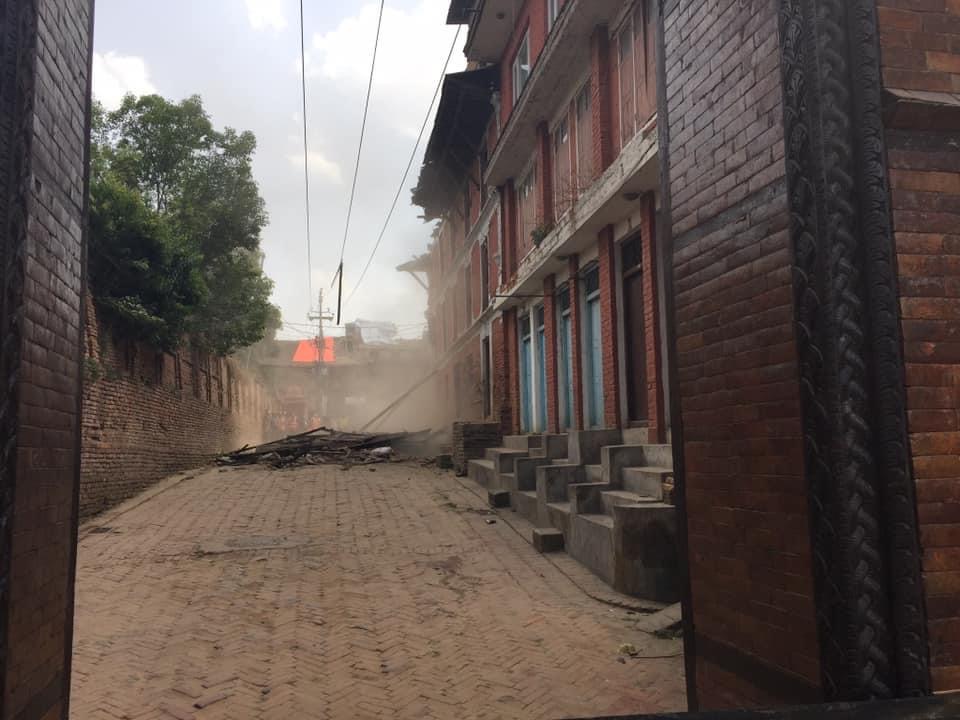
No, I didn’t know either. But Bhaktipur is the Birmingham of Nepal. I visited in May 2015 shortly after the earthquakes that caused huge devastation in parts of the country, to report on The Salvation Army’s emergency disaster response.

We visited a large tent city, managed by The Salvation Army in conjunction with other aid agencies and then headed into the centre to see why people had had to leave their homes. The air was still full of chokingly thick dust, even a week or so after the main quake. The damage was immense, with buildings at disturbingly odd angles and nothing quite joining up in the way townscapes usually do. (The main dual carriageway into the city had developed a peculiar split level effect, which vertically separated the east- and westbound traffic by more than a metre.)

But it was as we returned to our vehicle that the danger became very real. We had just walked along an innocuous-looking pathway and paused to breathe. Suddenly, there was an enormous clatter. We turned round to see a large section of roofing had fallen off the building we had just sauntered past and was now completely blocking the pathway. Twenty seconds difference, and we could have been in big trouble.

Such peril has, thankfully, not been the norm in my work. But it very much is for the International Emergency Services team, to whom I doff my (hard) hat this morning. And, hopefully, having experienced something of the horror myself, albeit in a limited sense – I still had a home to return to – it has improved my empathy for people affected by crises of all kinds, as well as improving my ability to write coherently about challenging situations.

Thank you Damaris and team.

A is for Altenkirchen

Standard

So, it’s official. Today is the start of my final week at The Salvation Army. Mixed feelings, and I suspect those feelings may become, erm, mixier over the coming days. To mark the occasion, I thought I’d run through an A to Z of ‘The Salvation Army and Me’. Here we go…

A is for Altenkirchen

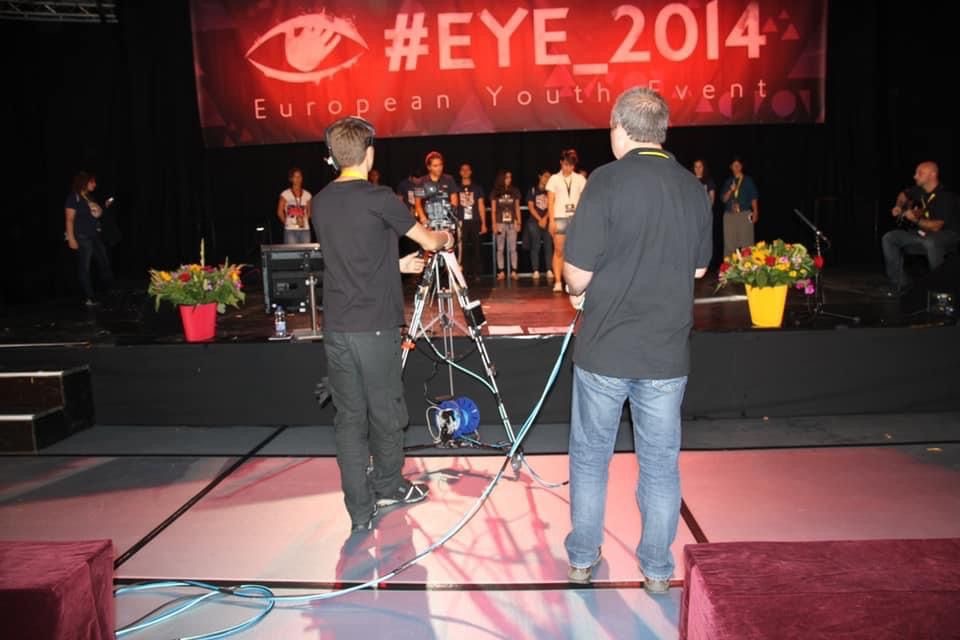
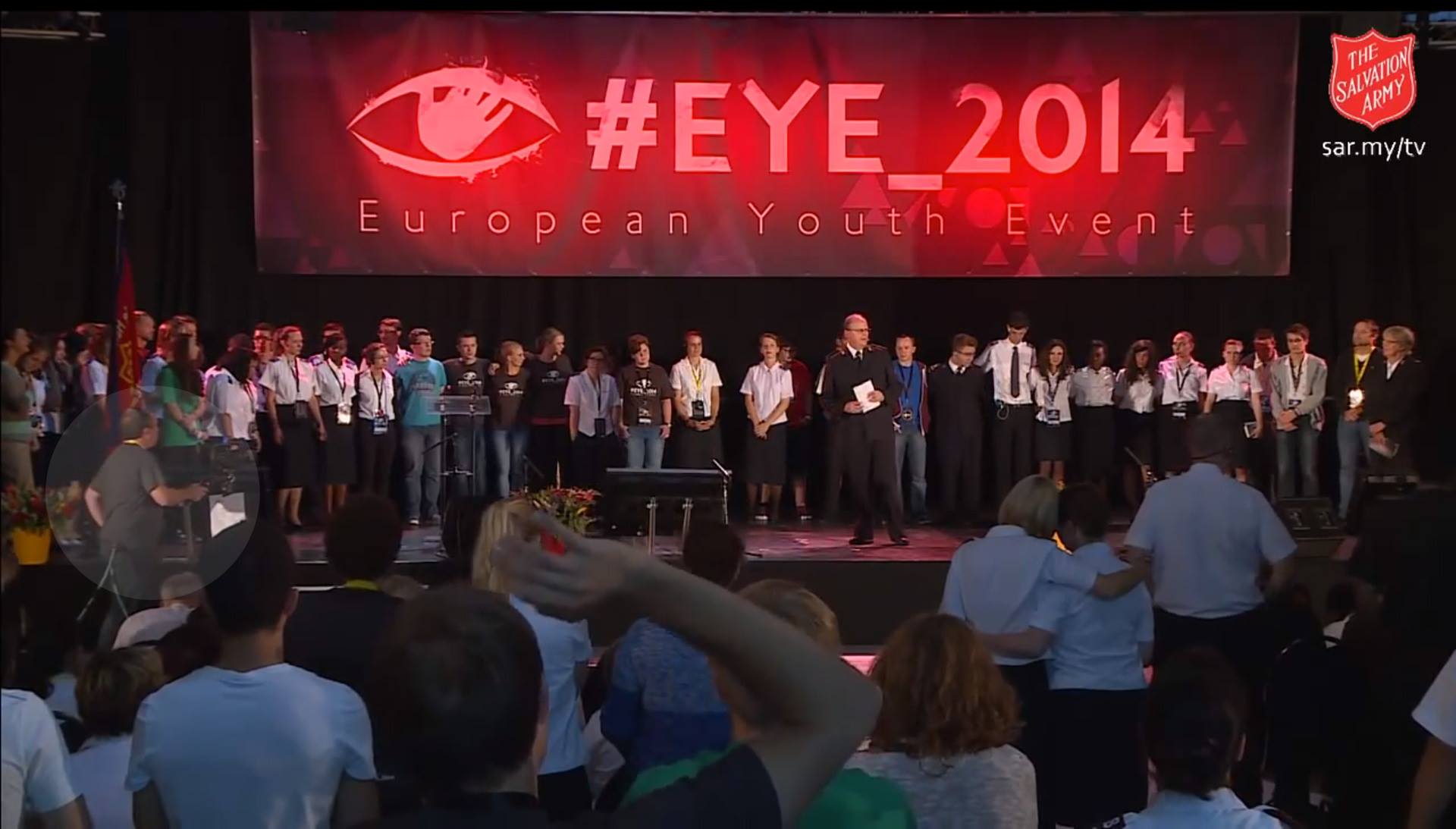
An unassuming small town in Germany became a focal point of Salvation Army activity in August 2014 as it hosted the European Youth Event. Young people flocked to a campsite from all over Europe and I was both part of the tech team and a reporter.

As has often proved to be the case, multiskilling and multitasking was the order of the day (or, in this instance, five very long 24-hour periods!). My main task was to curate the best of the social media activity from delegates for a large ‘social wall’ and to produce content for inclusion in real-time in the several live web streams we provided.

It may be a journalistic failing, but it’s impossible to remain aloof during events like this. The buzz was incredible, and despite a number of technical gremlins (who knew Germany has some of the most stringent rules on live broadcasting in the world?!) many young people responded energetically and enthusiastically to God’s call on their life. I found myself having to divert to operate cameras at more than point, as even the volunteer cameramen felt a divine nudge to go and pray. And the online audience extended well beyond even post-Brexit Europe – people watching in the US, Korea and New Zealand were also impacted by the very clear call to ‘Feel. Speak. Do’.

Highlights? There were many. Capturing on camera the precise moment that one young man decided to become a Salvation Army officer. The impassioned testimony of a delegate from Vietnam who had encountered the church by chance as a student in one European city and clearly heard God telling him to go and establish The Salvation Army in Hanoi. The multilingual chatter around the campfire that led to spontaneous worship songs.

Thank you Jonathan Roberts for the invitation to participate, and to Mark Calleran and Paul Gunnell for graciously sharing your wide experience of live event production.

(More pics and the archive of the live streams are available via sar.my/eye2014)

Train. Ferry. Train-ferry.

Standard

Once the hard work of EYE was over, it was time to head home. While it would have been straightforward to fly from Köln, I had discovered that my visit to Germany coincided with a little bit of rail/maritime history. So I remained on the train as it passed the airport station, and continued east to Berlin.

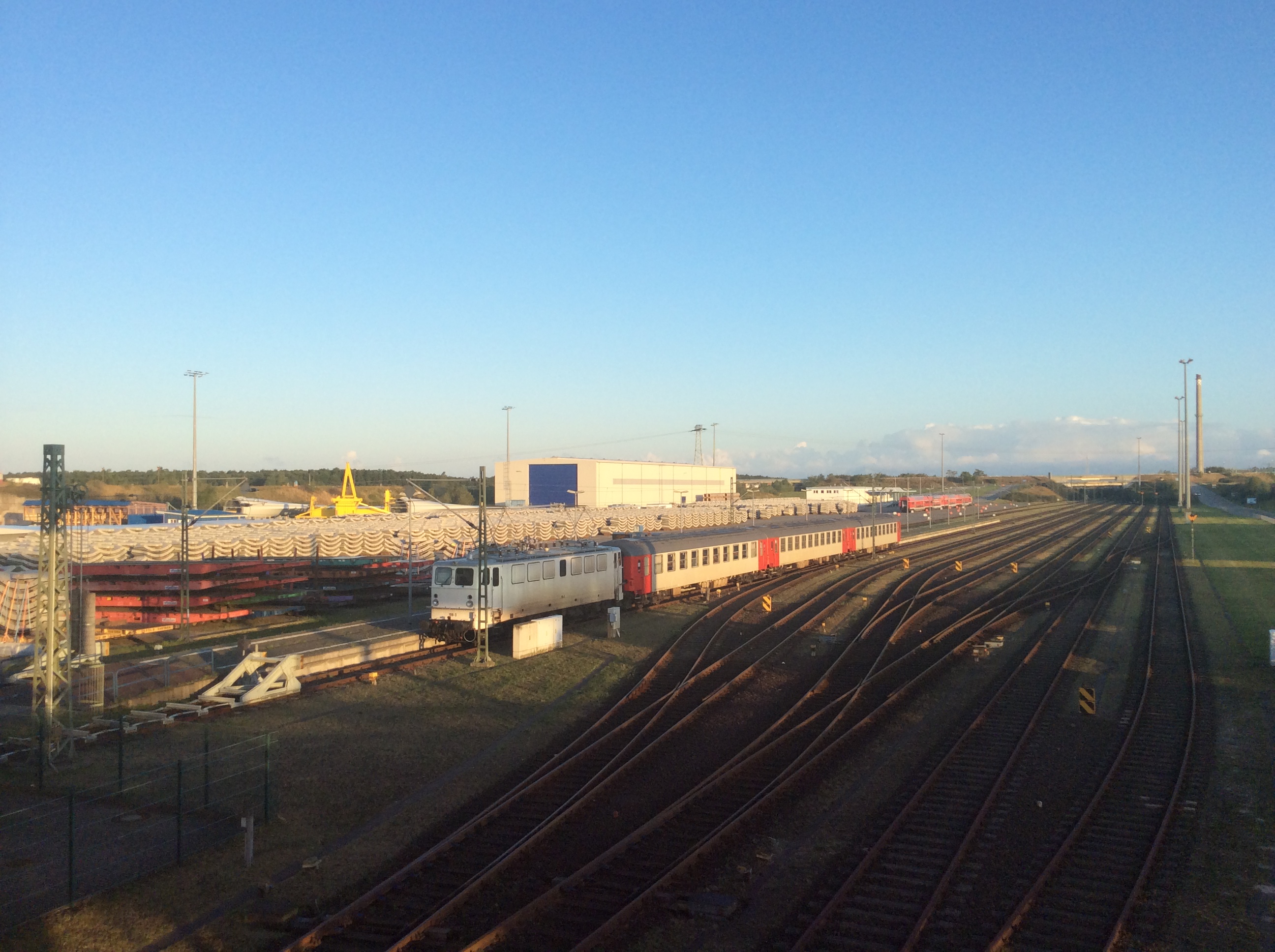
After the briefest of mooches, I then boarded the 22:28 Snälltåget train from Berlin to Malmö. This train is a curiosity in many ways, but not least that it spends most of its time either lurking in otherwise unused platforms or at sea.

Yes. At sea. The Baltic to be precise. And so it was at 7:15 this morning that the electric locomotive which had dragged the three carriages to Sassnitz harbour on the north German coast was uncoupled and a diesel locomotive attached to the other end. The ensemble was then shunted on to Stena Line’s MS Sassnitz ferry, for what was expected to be the very last time. Even the guard was taking photos of the occasion.

Snalltaget at Sassnitz Fahrhafen

Here’s a video clip of the process:

With the train safely loaded and the shunter returned to dry land, there was little to do except mooch up to Stena’s rather excellent all-you-can-eat breakfast buffet and while the hours away. For the record, the Scandinavians do breakfast pretty well: pork steak, scrambled eggs, sautéed potato, pancakes and syrup, Ikea-style meatballs with lingonberry jam, croissants, exquisite Danish pastries, cheese, ham, breads, spreads and a smörgåsbord including everything from herring to coronation chicken.

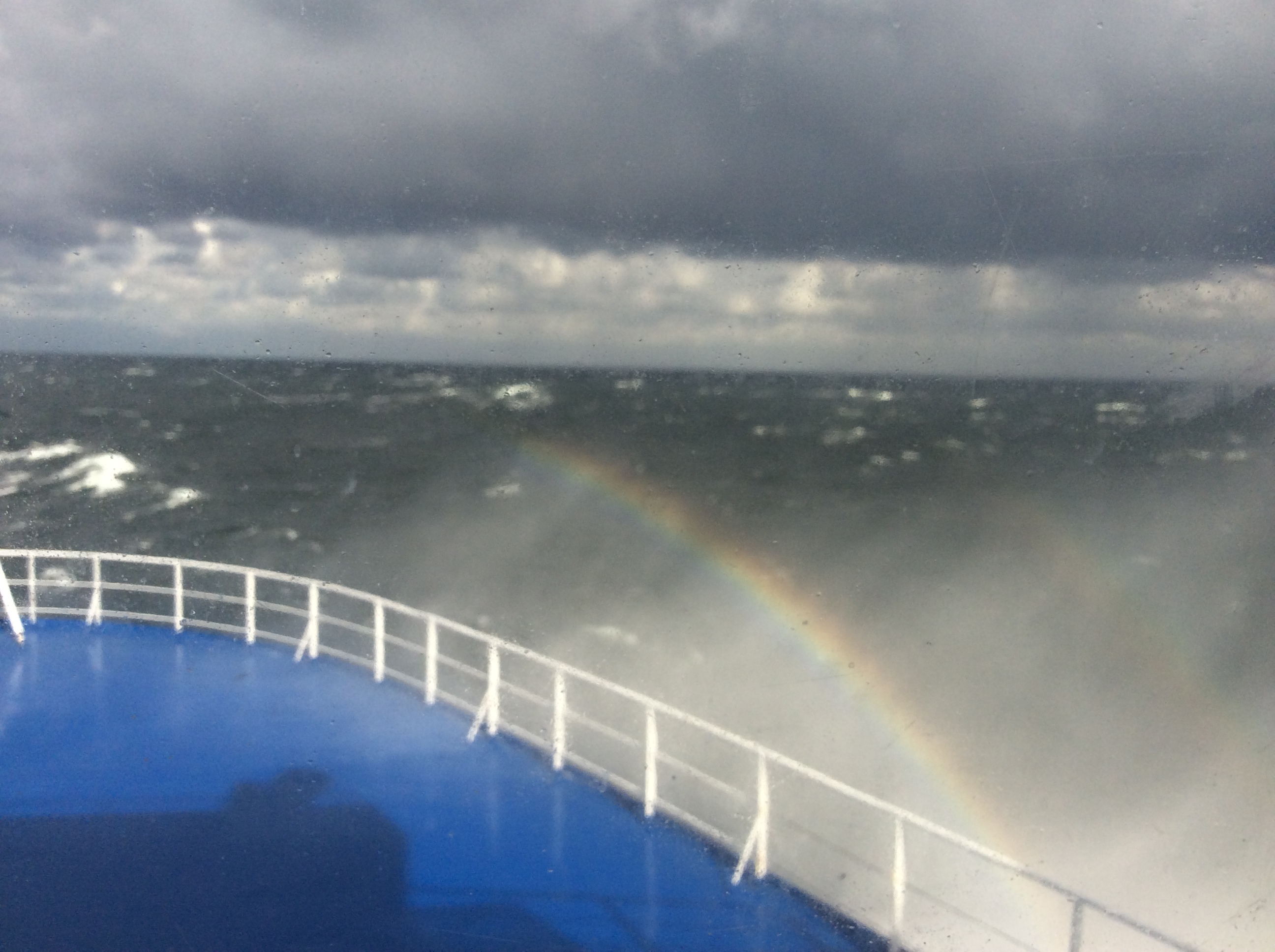
The crossing was somewhat lively, with the massive hulk of a ship thrown about like a rowing boat. Fortunately, the breakfast buffet had provided me with sufficient ‘ballast’ to weigh everything down.

Lively crossing of the Baltic Sea

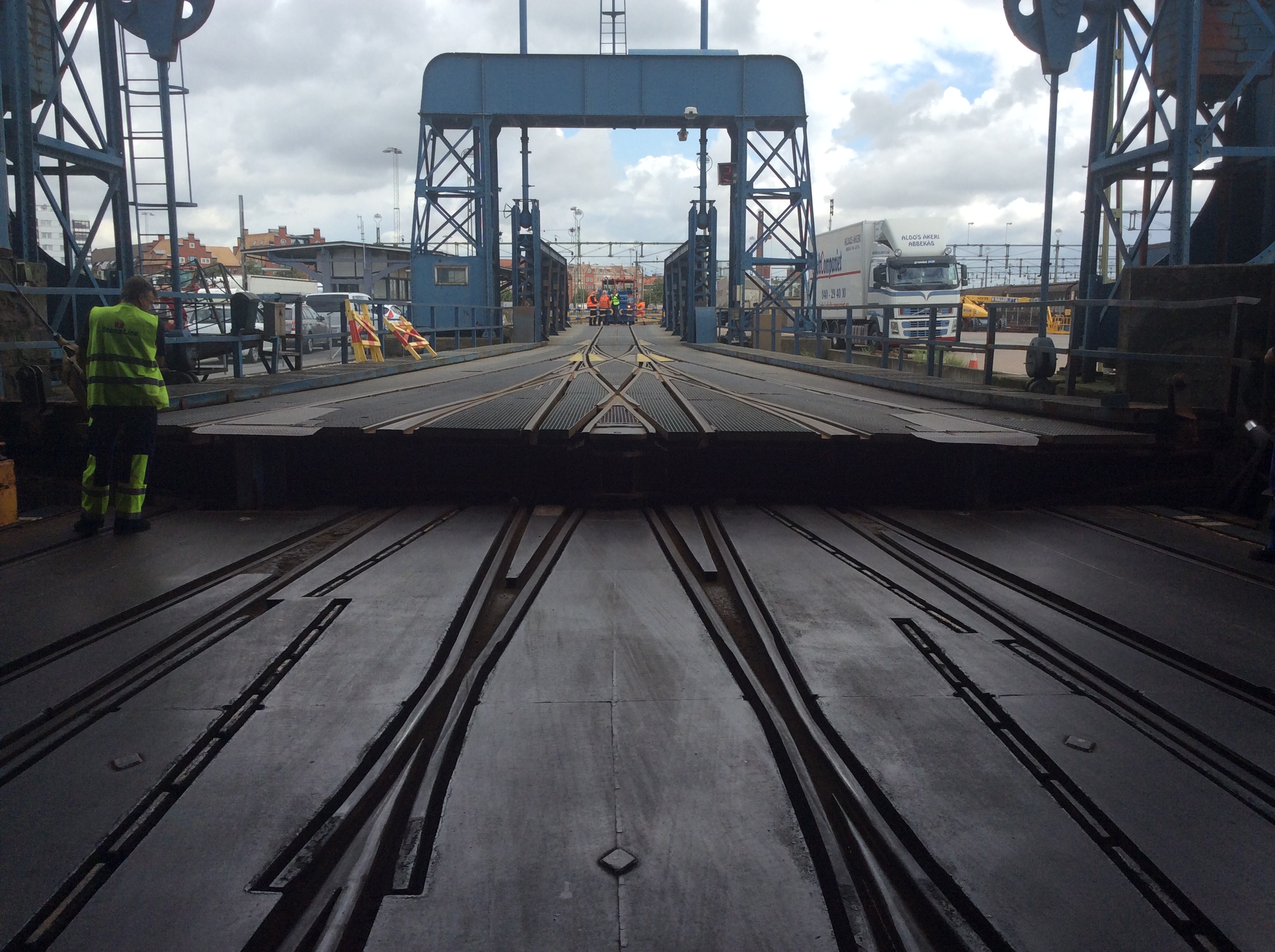
4½ hours later, the MS Sassnitz approached the Swedish port of Trelleborg. As it was a somewhat historic occasion, the Stena staff tolerated our presence on the train deck as the docking process was carried out – an impressively precise manoeuvre, with the tracks lining up on the first attempt.

Train ferry link span at Trelleborg

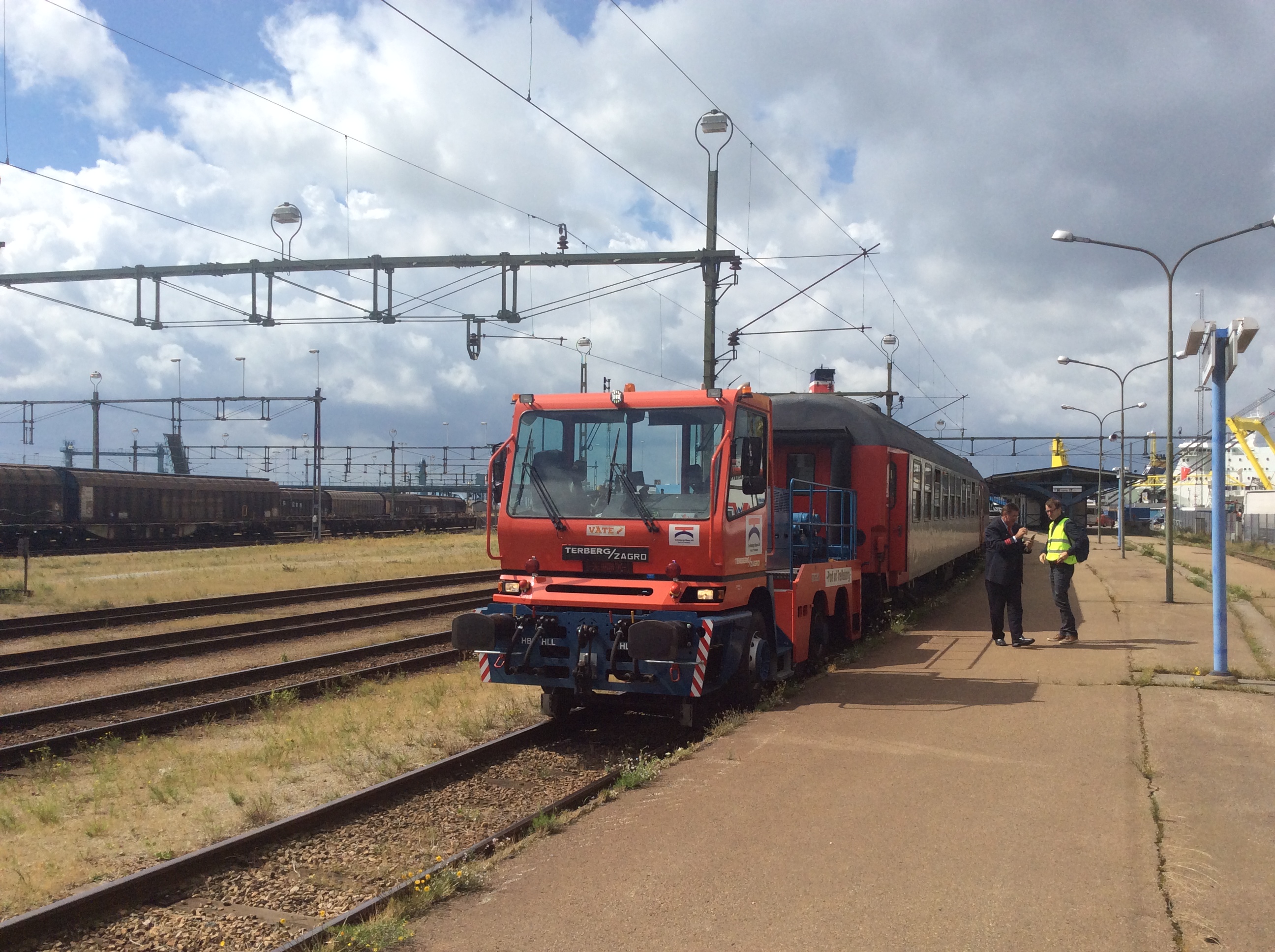
After the lorries and other large vehicles had been marshalled off, an unusual road-railer machine boarded the ferry to shunt the carriages on to the port’s rail network. This is almost certainly the weirdest rail haulage I’ve encountered.

Road-rail shunter

A Swedish loco then backed on to our train and whisked us off to the final destination of Malmö Central station, where it was only about 15 minutes late despite the time lost to the rough sea crossing.

From there, I took a Danish train across the incredible engineering achievement that is the Øresund bridge/tunnel to København airport for my flight back to London Heathrow.

EYE did it

Standard

For the last few days, I’ve been working in Germany on a series of six live webcasts for The Salvation Army’s European Youth Event. The premise: 600 young people from right across the continent convene in Altenkirchen (not a million miles from Köln) for a lively time together.

My role was to get all the content that wasn’t camera-generated on screen at the right time. That’s essentially name captions, song titles, lyrics, copyright attributions, credits and contributions from the Twittersphere. Being a youth event, the graphics were a little more funky than usual – animating on and off the screen in a manner that stretched the technology and my nerve to the limit.

As this was very much a ‘budget’ event (most of the young people were camping, though mercifully I’d got a hotel room with wi-fi to retreat to), we were producing the content ourselves. The camera operators were all volunteers from Norway, under the expert tuition of Brett – a colleague from the UK headquarters. Mark, the head of The Salvation Army’s international headquarters IT department, was directing and vision mixing with Sylvester, one of the IT support team, making sure we stayed on air.

We had to cope with quite a few last-minute changes to the plan, such as a hitherto undiscovered requirement to display tweets on the auditorium screens (thanks, Twitterfall). And a presenter who requested quite a few Bible readings to appear on-screen for all to read out (thanks, Bible Gateway). And, perhaps most terrifyingly, a complete loss of internet access about 12 minutes before we were supposed to start our live coverage of one of the morning sessions.

The flexibility and creativity of the AV team made it a great place to be, even with some of the technical, logistical and personal issues that had to be overcome. I escaped from my green screen operations several times, to vision mix, cable pull and operate one of the cameras for a while.

Here I am, out in the wild:

Me

The event itself was immensely encouraging – even backstage, the atmosphere was electric. Many young people responded to God’s call, with some becoming Christians and others taking steps towards becoming full time Salvation Army officers.

As the Communications team representative, I also had the responsibility for putting together the international news report – difficult to convey in a single report how vibrant the event was, but at least the webcasts remain online to give a flavour.


Green screen

Standard

Today, a new batch of Salvation Army cadets (trainees) were commissioned as fully-fledged officers (ministers). Although the commissioning meetings are a UK event, international headquarters has historically been drafted in to provide the technical support necessary for webcasting the ceremony and ensuing celebration.

So, despite being a Saturday, it was an early start and a shlep into London. My colleagues Mark and Gary had had an even more red-eyed beginning to the day, and had already set up the majority of the kit by the time I arrived.

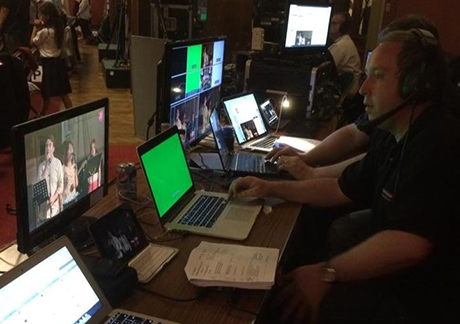
My role in the webcast production is ensuring that name captions, song lyrics, social media hashtags and other on-screen graphics appear at the right time. In this instance, it’s meant creating 864 Powerpoint slides. If that sounds a lot: it is!

In order to overlay the captions on the output from the cameras, the slides are created on a green background. That is then chromakeyed by the vision mixer so that the green matte is replaced by the shots from the camera.

This…

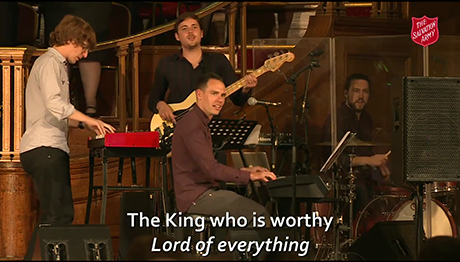
460-TheKingGreen

…becomes this:

460-TheKingChroma

The eagle-eyed amongst you will spot that the lower image also has a Salvation Army red shield emblazoned upon it. This is added digitally too, as a DSK (downstream key).

We usually use one DOG (digital onscreen graphic) in the top right-hand corner for branding purposes, and have a separate graphics for the top left-hand corner for Twitter handles, ‘LIVE’ indicators, etc. They can be cued independently of the Powerpoint or MediaShout presentation.

Our web streams are now handled via YouTube, which gives us a number of advantages over alternative providers – not least that it’s a free service and that it is scalable. Once the technical team has connected everything together, all I need to do is embed a snippet of code on the right web page and then make sure that my content appears at the right time in the programme.

460-Me

In the event of unexpected repeats of sections of congregational songs, I can take myself off-air, find the right slide and re-cue in a second or two – though it does help if everything is rehearsed first.

As this was a UK Salvation Army event, I could sit back and let someone else take care of the social media side of things – but it was a pretty healthy response for a Saturday afternoon gathering clashing with some major sporting event or other.

After the evening gathering, the de-rigging was especially important as the kit is travelling to Singapore for its next gig (20 July). I’m not accompanying it on this occasion, but will be providing support from afar.

You can watch Saturday’s endeavours at http://sar.my/tv.

Thunderclaps are go!

Standard

Dodgy grammar, admittedly. But in the manner of Thunderbird 1 rising dramatically from its secret under-pond location on Tracy Island, the social media buzz I’ve been cultivating for The Salvation Army’s 149th anniversary today has been successfully launched.

For the last couple of weeks, I’ve been inviting/encouraging/nagging Salvation Army friends and supporters to sign up to a birthday greeting Thunderclap. The aim: to reach as many people on Twitter, Facebook and Tumblr as possible.

In the event, we exceeded the 500-name goal quite considerably and, by virtue of the friends-of-friends multiplication factor, more than 673,000 people will have seen the birthday greeting. With a special Founders’ Day meeting and morning coffee/cake at The Salvation Army’s international headquarters, there’s been lots going on. Sufficient to merit a live text commentary, that I’ve been beavering away on all day.

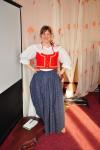
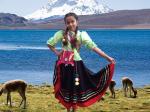
To make it more interactive, we’ve been encouraging people to share photos of themselves in national dress – a picture of how The Salvation Army has spread from a single gathering in east London back in 1865 to a multinational church and charity operating in over 126 countries today. The response was pretty good, with photos coming in from every continent.

Of course, the 149th anniversary is just a foretaste of the massive 150th birthday bonanza in July 2015. It’s going to be a frantically busy 12 months…