
A recommended part of my MA Media Communications study back in 2015 was to attend and participate in an Internet Governance Forum (IGF). Fortunately, my employer agreed that this would be of benefit and my application was accepted.
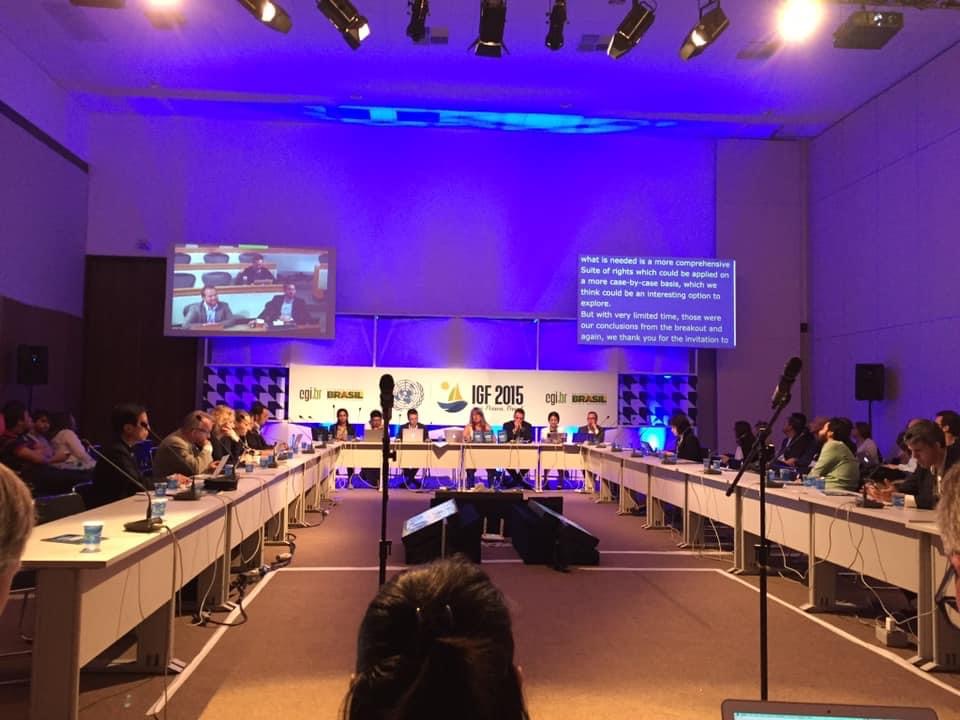
The event, the tenth IGF, was themed ‘Evolution of Internet Governance: Empowering Sustainable Development’ and was held in a spangly new conference centre in João Pessoa on the eastern tip of Brazil. I attended on behalf of ‘civil society’, and in fact there was much of relevance to The Salvation Army as well as my Masters research. In the opening plenary session, Brazil’s Minister of Communications, André Figueiredo, observed that equitable access to the internet for those not yet connected was a pressing social justice issue. He called on business, private enterprise and the charitable sector not to tolerate a situation where the gulf between the haves and the have nots could widen further.
Over the week, there were ample opportunities to address this point (and the related topic of education and empowerment, especially in minority groups). The other big topic, which was hugely relevant to my studies was data privacy – Wikileaks was hot news, the Right to be Forgotten (Max Schrems et al) and its implications was fervently debated and government surveillance of internet use was in the spotlight following the revelations of Edward Snowden.
Being a UN-led event, security was extremely high (technically, the conference centre had been ‘denationalised’ and was international territory requiring passport and security checks both entering and leaving). I found myself in small discussion groups (and sometimes larger, more formal round-tables) with ambassadors, high commissioners and the great and the good from business, academia and the scientific community. A real highlight was a speech by Vint Cerf, one of the ‘founding fathers’ of the internet. In it, he captured a hope that the tool which was intended to benefit all would still, one day, achieve that laudable goal.
The Brazilian government hosted us well, with free meals and drinks for the duration of the event, which was an unexpected bonus (particularly as the agreement was that such frippery would be a personal expense). There was an opportunity to visit some local historic sites, which also enabled me to travel on the local railway – João Pessoa is one of very few Brazilian cities with a passenger train service. And my commute for the week, from a simple but comfortable, cool posada in central João Pessoa was just idyllic – a mile-long walk along a pristine palm-lined beach, followed by a free 20-minute air conditioned shuttle bus journey.
Such a privilege to be part of IGF, and to have had an opportunity to argue directly for greater equity in technological provision. And, actually, to have a measure of confidence that generally people across the spectrum agreed.
 David Giles Communications