D is for Darjeeling, Dhariwal and Delhi

Standard

Three for the price of one today.

One element of The Salvation Army’s 150th anniversary celebrations was a film festival intended to showcase some of the movement’s diverse ministry. Then-boss John Murray felt that it would be prudent for us to submit our own entry. And so it was that I travelled with him to India in May 2015, ably accompanied by Gaz Rose and boom pole holder extraordinaire Howard Dalziel. Our task: to tell the story of how The Salvation Army began in India – it’s first international foray – and how the work had developed today.

It’s fair to say I didn’t know much about India. And after two weeks of full-on travel, interviewing, capturing b-roll and context footage, sound and stills, I’ve still only scratched the surface. But what an amazing surface it is. So many languages, cultures, landscapes, histories, tastes, sounds and (especially) smells!
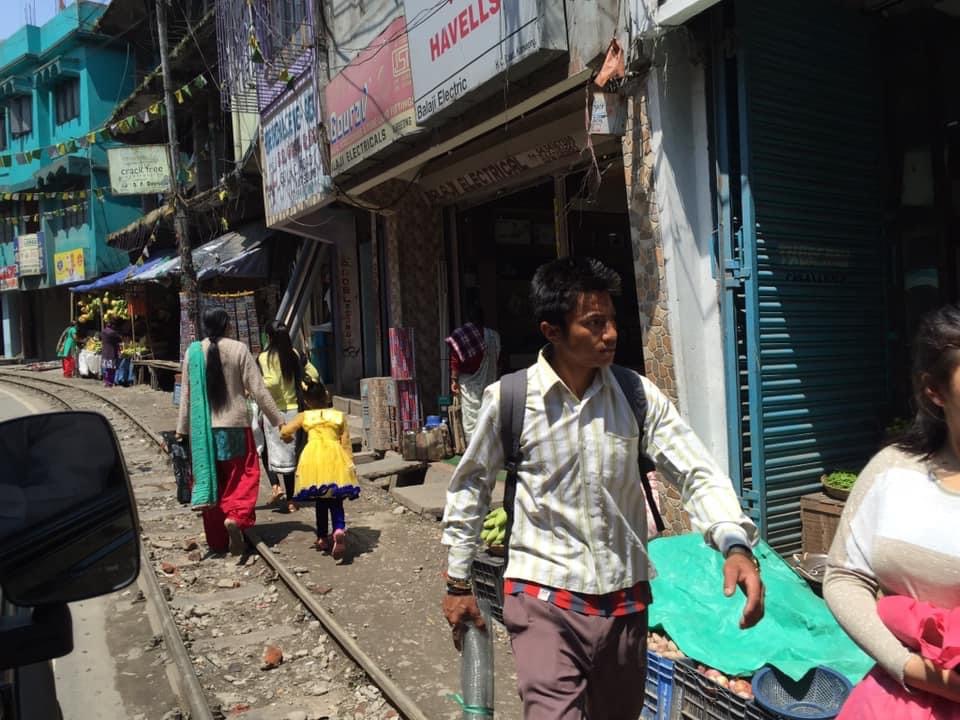
India is BIG. This seems obvious, but I really felt it after a fortnight of constant movement from one location to the next. The admiration we had for the early Salvation Army pioneers, led by Frederick Booth-Tucker, only increased as we appreciated the scale of their task without the modern transport and facilities we were able to utilise.

And fortunately (for it would have been a rubbish film otherwise), God is also big in India. We visited Salvation Army-run hospitals and clinics, such as the one in Dhariwal offering health services to very rural and remote communities for whom healthcare would otherwise be unaffordable. We visited schools, including two in the Darjeeling area dedicated to young people with special needs – blind and deaf students respectively. We visited an inner-city project in Delhi offering hope and practical support to Burmese migrants who effectively didn’t even exist in the government’s eyes, and could therefore neither legally work nor draw statutory benefits.

It’s impossible to select a specific highlight. Worshipping in a ramshackle tin hut on a tea plantation in the Himalayan foothills? Playing football with a bunch of young lads who attend a Salvation Army project in the red light district of Mumbai because their mothers are touting for ‘trade’ nearby? Listening to the aspirations of the ‘railway children’ who eke out a precarious life alongside the tracks in Kolkata? Walking barefoot on the cool marble of the Golden Temple in Amritsar, reflecting on the mélange of faiths and traditions and yet the acceptance of The Salvation Army and its message in many, many communities? The genuinely warm welcomes and inevitable garlanding everywhere we went? Surviving the terrifying road traffic and rather dodgy planes?!

So much to be thankful for.

The film, should anyone be interested: https://www.youtube.com/watch?v=MMTWYnJvEVY
C is for Czech Republic

Standard

Continuing my ‘The Salvation Army and Me’ ramble…

I think beautiful Prague may be vying with Copenhagen for the city I have visited most often on business, and for a variety of reasons. However, my first visit was at the request of the chair of The Salvation Army’s European Communications Network, who asked if I would present a session on digital communications to a distinguished group made up of communications practitioners from around Europe.

This was pretty early on in my time at International Headquarters and I must have bluffed my way through reasonably competently, as I was subsequently invited to take part – in a different European city each time – every year since.

The ECN has been the most consistently supportive and influential group I’ve been a member of, and I have formed many deep friendships. A true band of brothers (and sisters). It’s risky to name names, but particular kudos must go to Lars and Pavla Lydholm, Menno de Boer, Nathan Sudmeier, David Germain, Mats Wiberg and (fellow train buff) Lars Beijer!

We have learned together, shared ideas together, laughed together, eaten a preposterous amount of ice cream together, raised eyebrows together and generally worked extremely hard at telling the story of The Salvation Army to audiences right across Europe. ECN has boosted my confidence as an individual somewhat prone to self-doubt, and proved utterly invaluable when there has been a need to respond rapidly to some of the crises that have occurred over the years. The mutual trust and respect is something that takes time to develop, but is vital in this sphere of work.

ECN is also responsible for some of the more bonkers shared experiences, many of which will need to remain unreported! But memories of the marvellously over-complicated Wallace and Grommit-style pancake machine will never fade away. And neither will the experience of sitting through a presentation by an exceptionally verbose tour guide in Florence, who – following the conclusion of the day’s official business – wittered on for so long that by the time the lecture had finished, all of the historic sights had closed!

Děkuji. Tak. Tack. Takk. Merci. Grazie. Danke. Kiitos. Dank u. Gracias. Dziękuję. Спасибі. Paldies. Obrigado. Mulțumesc. Þakka þér fyrir. (Who have I left out?!)

B is for Bhaktipur

Standard

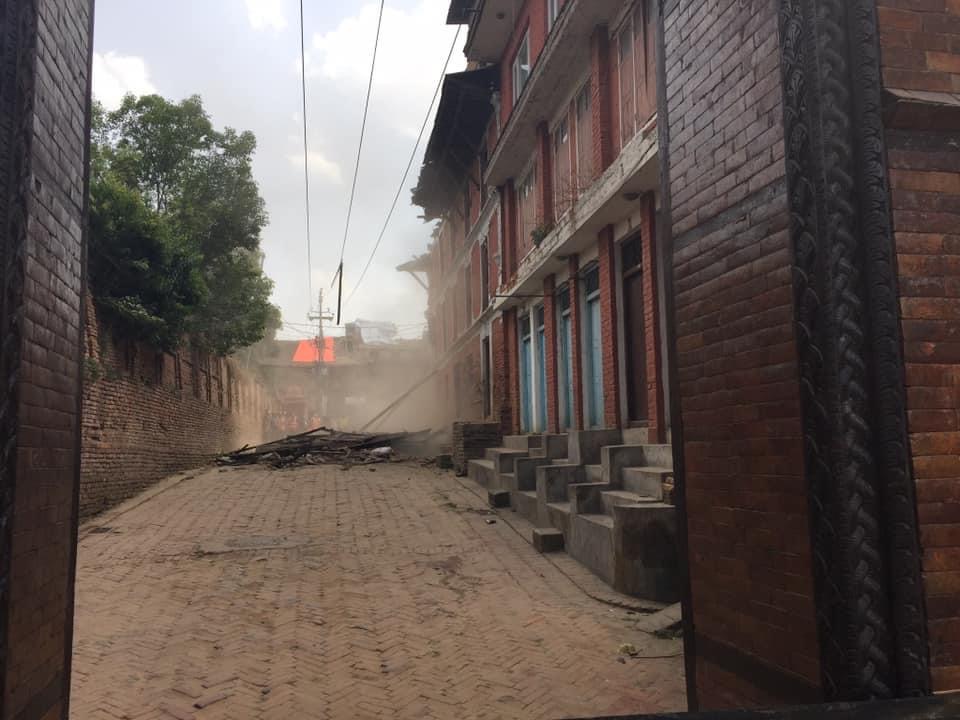
No, I didn’t know either. But Bhaktipur is the Birmingham of Nepal. I visited in May 2015 shortly after the earthquakes that caused huge devastation in parts of the country, to report on The Salvation Army’s emergency disaster response.

We visited a large tent city, managed by The Salvation Army in conjunction with other aid agencies and then headed into the centre to see why people had had to leave their homes. The air was still full of chokingly thick dust, even a week or so after the main quake. The damage was immense, with buildings at disturbingly odd angles and nothing quite joining up in the way townscapes usually do. (The main dual carriageway into the city had developed a peculiar split level effect, which vertically separated the east- and westbound traffic by more than a metre.)

But it was as we returned to our vehicle that the danger became very real. We had just walked along an innocuous-looking pathway and paused to breathe. Suddenly, there was an enormous clatter. We turned round to see a large section of roofing had fallen off the building we had just sauntered past and was now completely blocking the pathway. Twenty seconds difference, and we could have been in big trouble.

Such peril has, thankfully, not been the norm in my work. But it very much is for the International Emergency Services team, to whom I doff my (hard) hat this morning. And, hopefully, having experienced something of the horror myself, albeit in a limited sense – I still had a home to return to – it has improved my empathy for people affected by crises of all kinds, as well as improving my ability to write coherently about challenging situations.

Thank you Damaris and team.

A is for Altenkirchen

Standard

So, it’s official. Today is the start of my final week at The Salvation Army. Mixed feelings, and I suspect those feelings may become, erm, mixier over the coming days. To mark the occasion, I thought I’d run through an A to Z of ‘The Salvation Army and Me’. Here we go…

A is for Altenkirchen

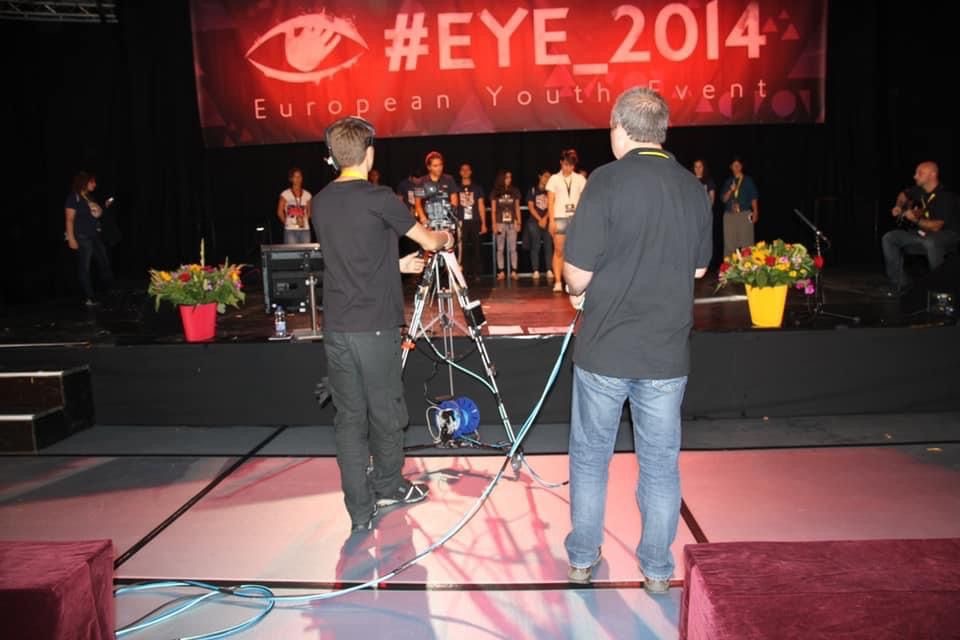
An unassuming small town in Germany became a focal point of Salvation Army activity in August 2014 as it hosted the European Youth Event. Young people flocked to a campsite from all over Europe and I was both part of the tech team and a reporter.

As has often proved to be the case, multiskilling and multitasking was the order of the day (or, in this instance, five very long 24-hour periods!). My main task was to curate the best of the social media activity from delegates for a large ‘social wall’ and to produce content for inclusion in real-time in the several live web streams we provided.

It may be a journalistic failing, but it’s impossible to remain aloof during events like this. The buzz was incredible, and despite a number of technical gremlins (who knew Germany has some of the most stringent rules on live broadcasting in the world?!) many young people responded energetically and enthusiastically to God’s call on their life. I found myself having to divert to operate cameras at more than point, as even the volunteer cameramen felt a divine nudge to go and pray. And the online audience extended well beyond even post-Brexit Europe – people watching in the US, Korea and New Zealand were also impacted by the very clear call to ‘Feel. Speak. Do’.

Highlights? There were many. Capturing on camera the precise moment that one young man decided to become a Salvation Army officer. The impassioned testimony of a delegate from Vietnam who had encountered the church by chance as a student in one European city and clearly heard God telling him to go and establish The Salvation Army in Hanoi. The multilingual chatter around the campfire that led to spontaneous worship songs.

Thank you Jonathan Roberts for the invitation to participate, and to Mark Calleran and Paul Gunnell for graciously sharing your wide experience of live event production.

(More pics and the archive of the live streams are available via sar.my/eye2014)