
Once the hard work of EYE was over, it was time to head home. While it would have been straightforward to fly from Köln, I had discovered that my visit to Germany coincided with a little bit of rail/maritime history. So I remained on the train as it passed the airport station, and continued east to Berlin.
After the briefest of mooches, I then boarded the 22:28 Snälltåget train from Berlin to Malmö. This train is a curiosity in many ways, but not least that it spends most of its time either lurking in otherwise unused platforms or at sea.
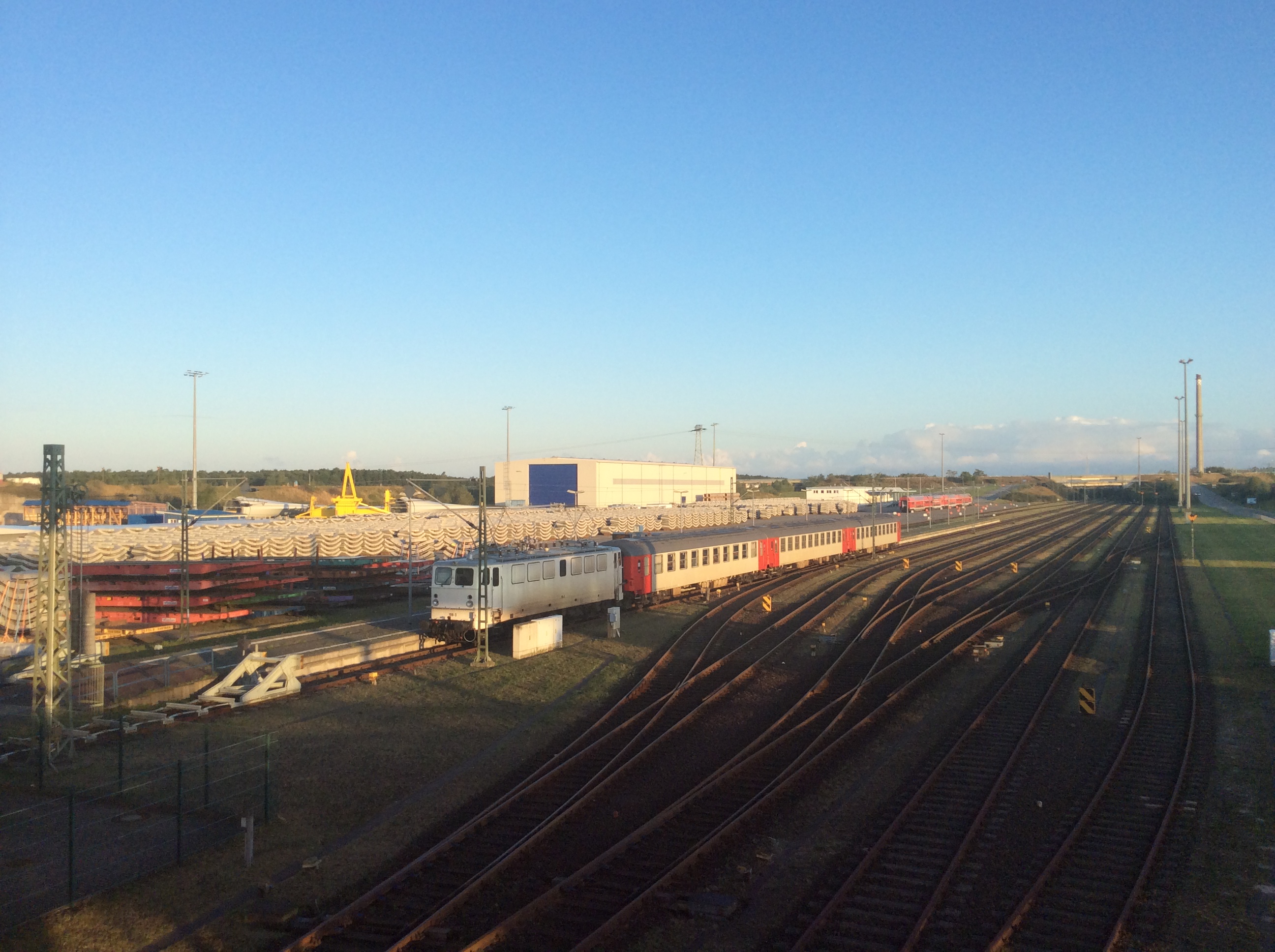
Yes. At sea. The Baltic to be precise. And so it was at 7:15 this morning that the electric locomotive which had dragged the three carriages to Sassnitz harbour on the north German coast was uncoupled and a diesel locomotive attached to the other end. The ensemble was then shunted on to Stena Line’s MS Sassnitz ferry, for what was expected to be the very last time. Even the guard was taking photos of the occasion.
Here’s a video clip of the process:
With the train safely loaded and the shunter returned to dry land, there was little to do except mooch up to Stena’s rather excellent all-you-can-eat breakfast buffet and while the hours away. For the record, the Scandinavians do breakfast pretty well: pork steak, scrambled eggs, sautéed potato, pancakes and syrup, Ikea-style meatballs with lingonberry jam, croissants, exquisite Danish pastries, cheese, ham, breads, spreads and a smörgåsbord including everything from herring to coronation chicken.
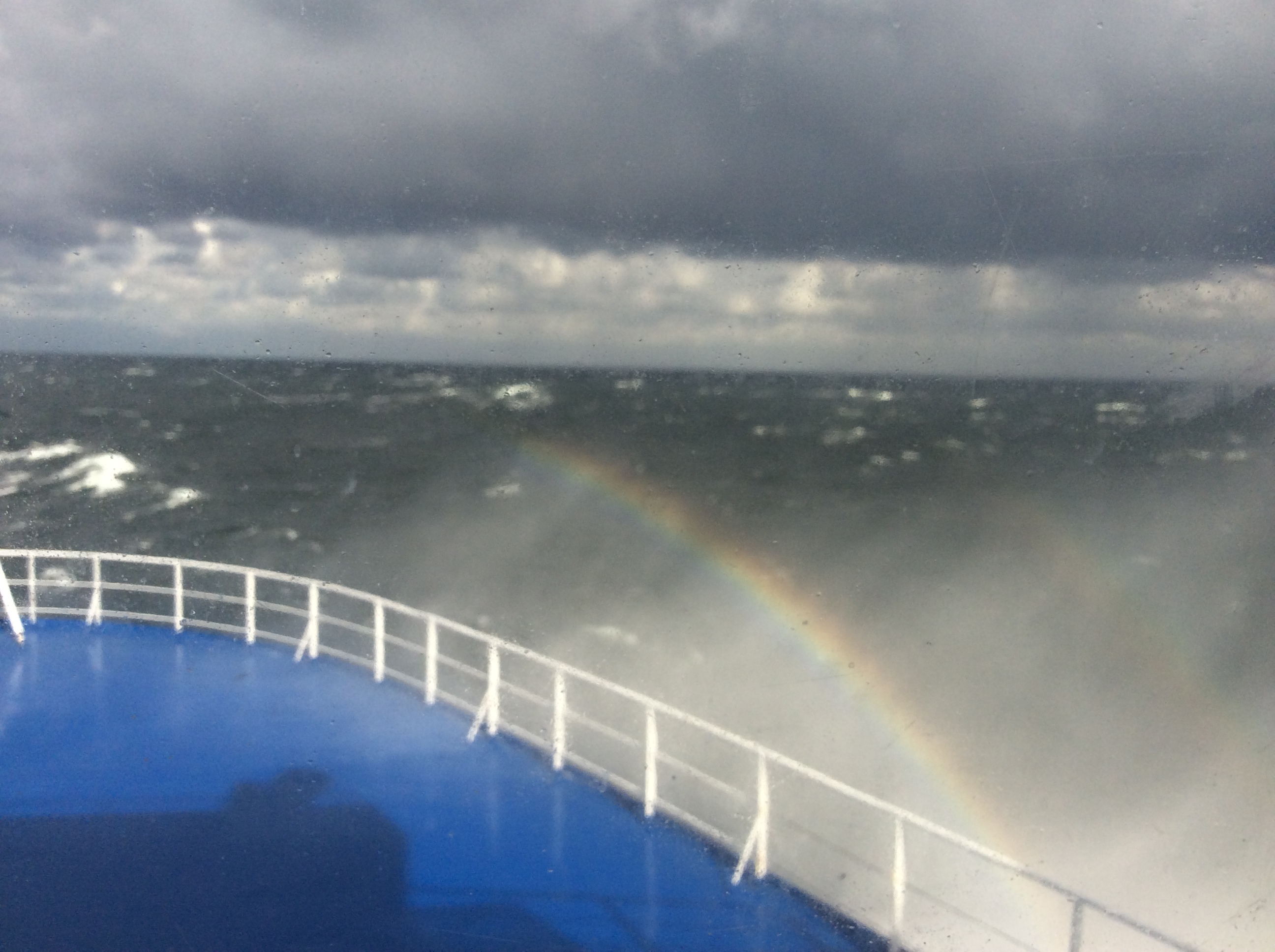
The crossing was somewhat lively, with the massive hulk of a ship thrown about like a rowing boat. Fortunately, the breakfast buffet had provided me with sufficient ‘ballast’ to weigh everything down.
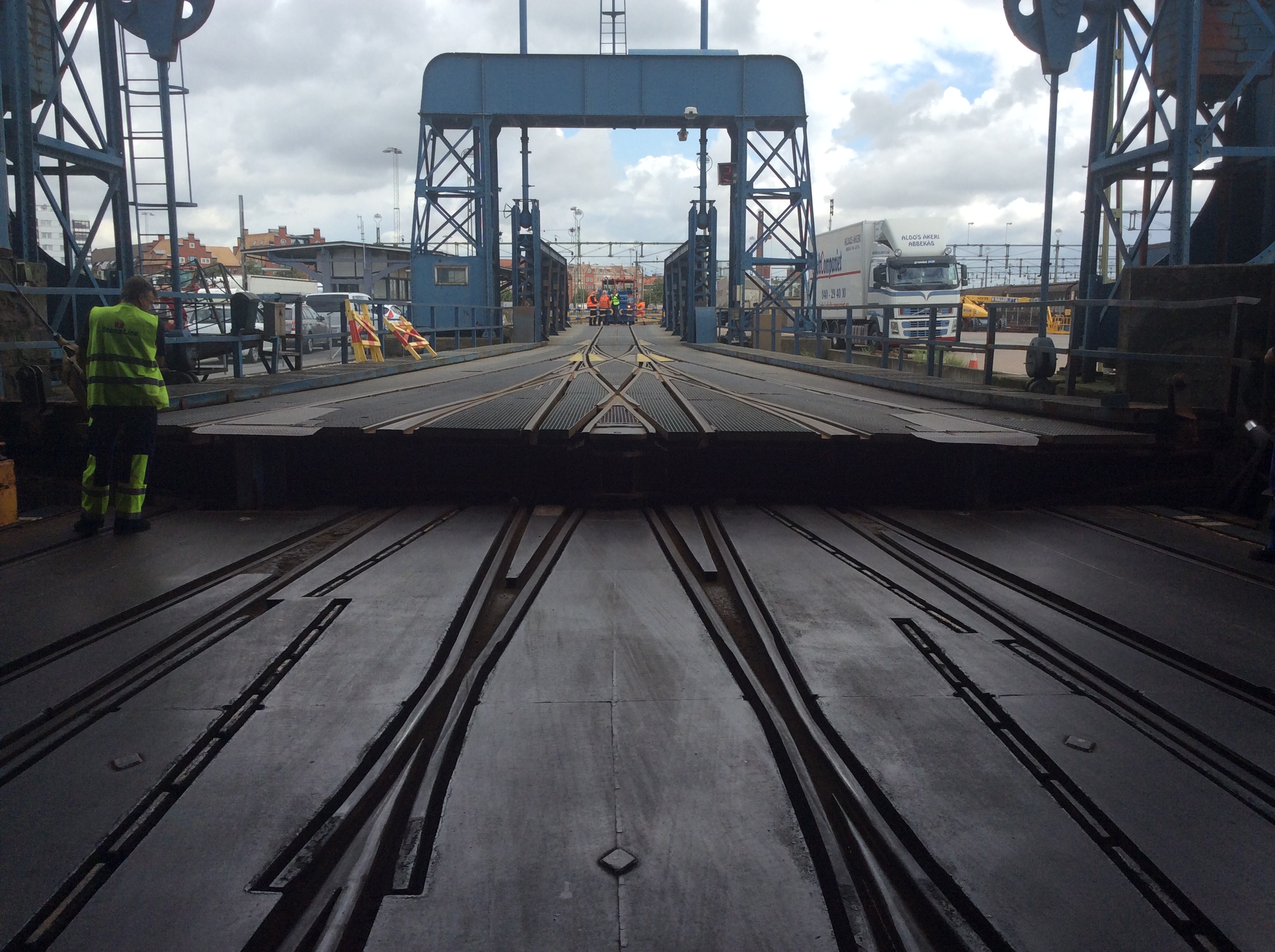
4½ hours later, the MS Sassnitz approached the Swedish port of Trelleborg. As it was a somewhat historic occasion, the Stena staff tolerated our presence on the train deck as the docking process was carried out – an impressively precise manoeuvre, with the tracks lining up on the first attempt.
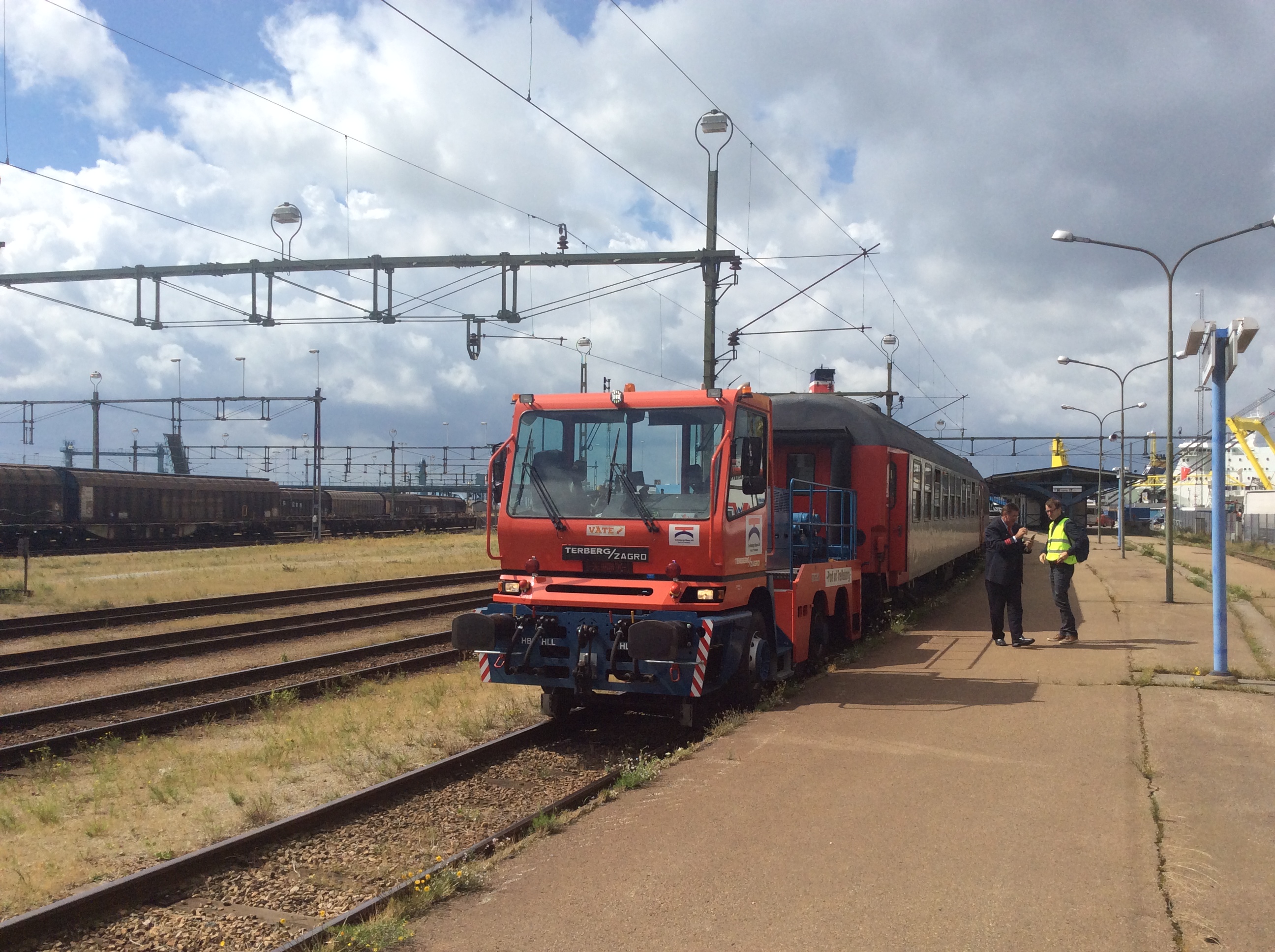
After the lorries and other large vehicles had been marshalled off, an unusual road-railer machine boarded the ferry to shunt the carriages on to the port’s rail network. This is almost certainly the weirdest rail haulage I’ve encountered.
A Swedish loco then backed on to our train and whisked us off to the final destination of Malmö Central station, where it was only about 15 minutes late despite the time lost to the rough sea crossing.
From there, I took a Danish train across the incredible engineering achievement that is the Øresund bridge/tunnel to København airport for my flight back to London Heathrow.
 David Giles Communications